I designed every ad on Expedia
Expedia Group, Ads
$483M to $758M
Expedia Group ad revenue, 2023 to 2025, from the Form 10-K. My ad units are what travelers see across that business.
Expedia Group had no ads designer when I joined in 2020. I became the first, and the solo designer on ads. I designed all 29 consumer ad units on Expedia, Hotels.com and Vrbo, wrote the rules they follow, and shipped them with PMs and engineers. One unit brings in $13M+ a year on its own.
- My role
- Designer, solo on ads. First dedicated ads designer at Expedia Group.
- What I owned
- The ad design rules, every consumer ad unit and the ads design system
- Worked with
- PMs and engineers, plus ad sales and creative
- Time
- Nov 2020 to now
Expedia Group advertising revenue, excluding trivago: $483M in 2023 and $758M in 2025, both from the FY2025 Form 10-K.1
Travelers skip anything that looks like a banner
Discovery1 of 7
I started by mapping every place an ad could appear and every kind of advertiser who buys one: hotels, airlines, airports, destinations, car companies, cruise lines and rentals. I worked with ad sales and creative to learn what advertisers ask for, and I studied how travelers move through the pages ads sit on.
The insightTravelers skip anything that looks like a banner, and they stop trusting a page that hides what is paid. An ad works on Expedia when it looks and behaves like Expedia, and says clearly that it is sponsored.
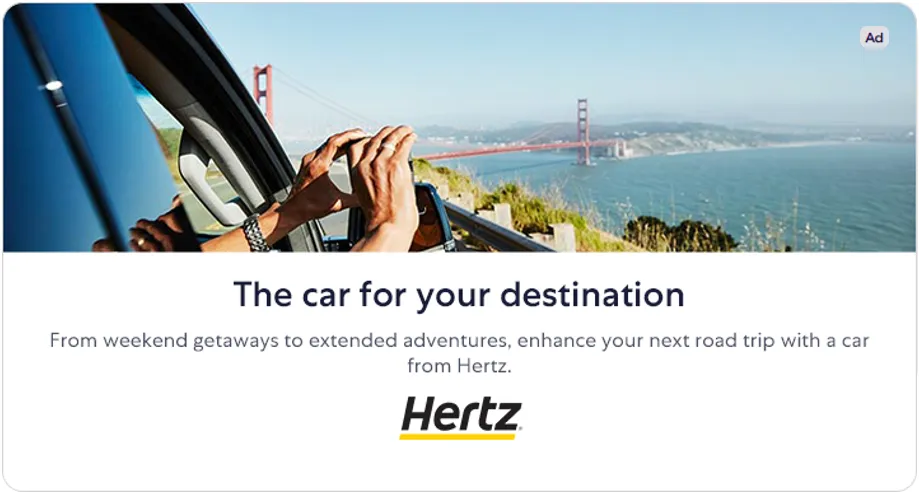
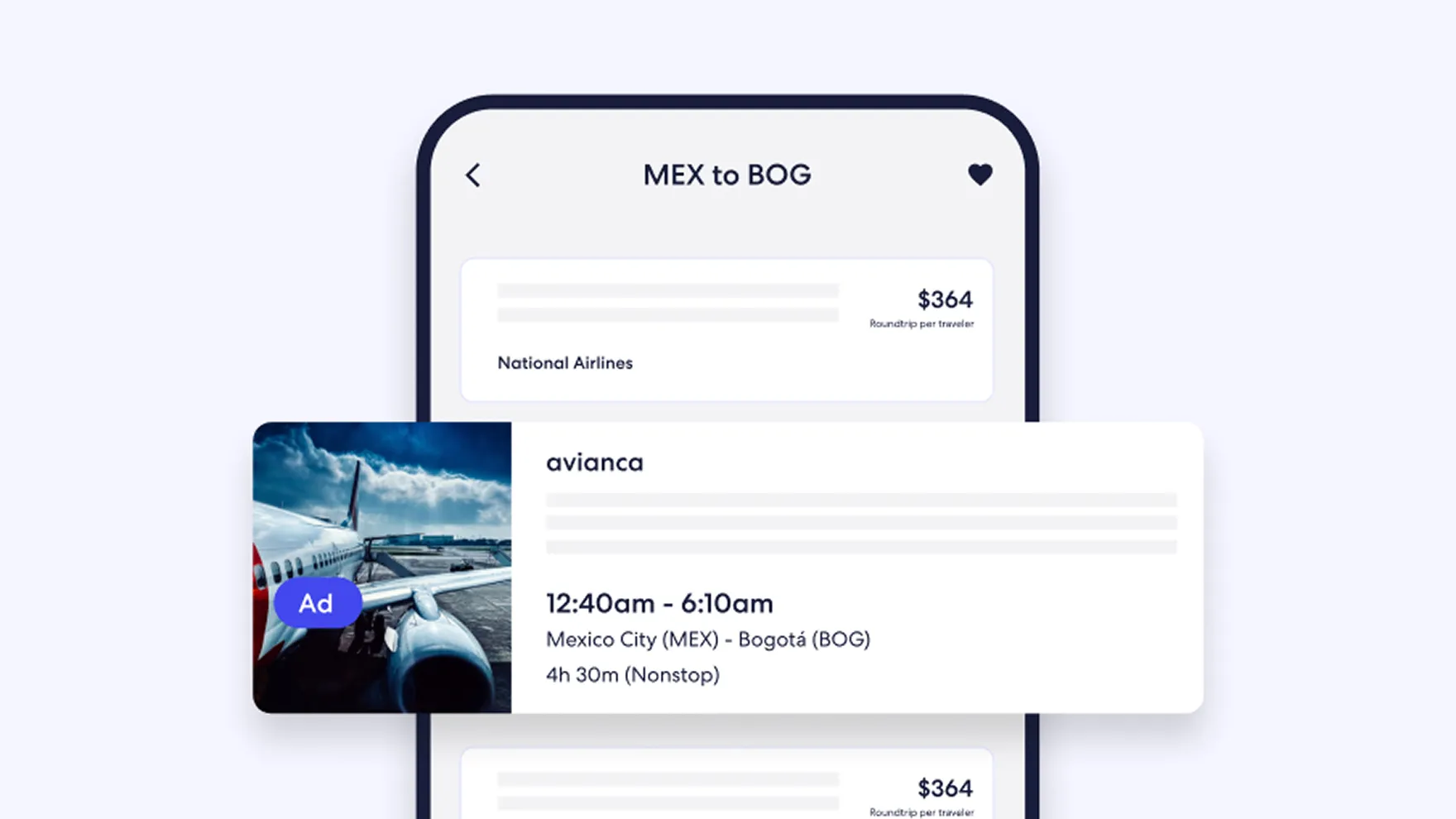
I designed ads as one product family
Vision and plan2 of 7
My plan was to design ads as one product family. One anatomy, one set of rules and one Figma system, so every new unit starts from a proven base and ships faster.
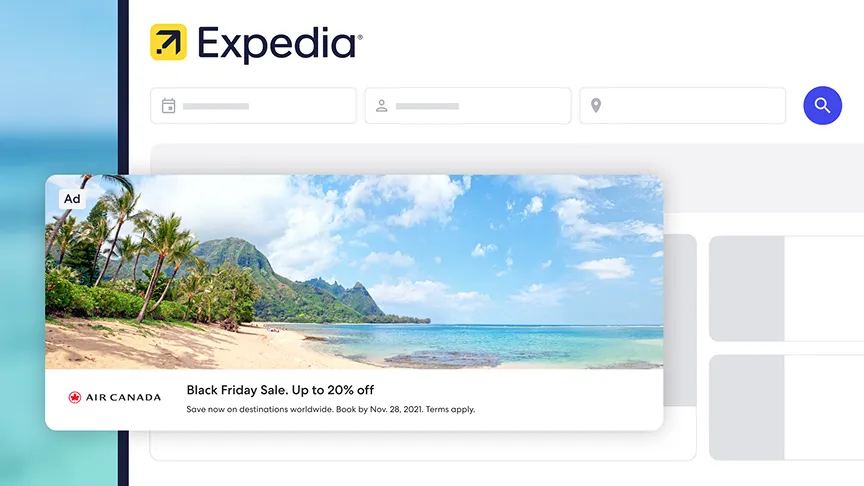
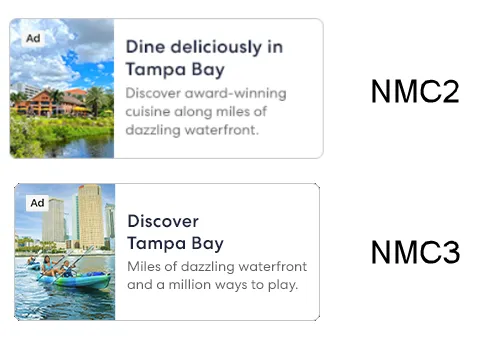
I started with the Native Marquee Card, the flagship brand unit under the search box. It was my first ads design, and it became the template for every unit after it.
I cut free-form layouts to protect trust
Exploration in Figma3 of 7
In Figma I explored many directions for the Marquee, from loud brand layouts to cards that sit inside the page like Expedia’s own content. I cut free-form layouts for each advertiser. They looked bold in a review, but they broke the page and blurred the line between content and ads.
I kept a card that matches Expedia’s content, with one image, a short headline, one link and a fixed Ad label. That anatomy now runs through the whole family below.
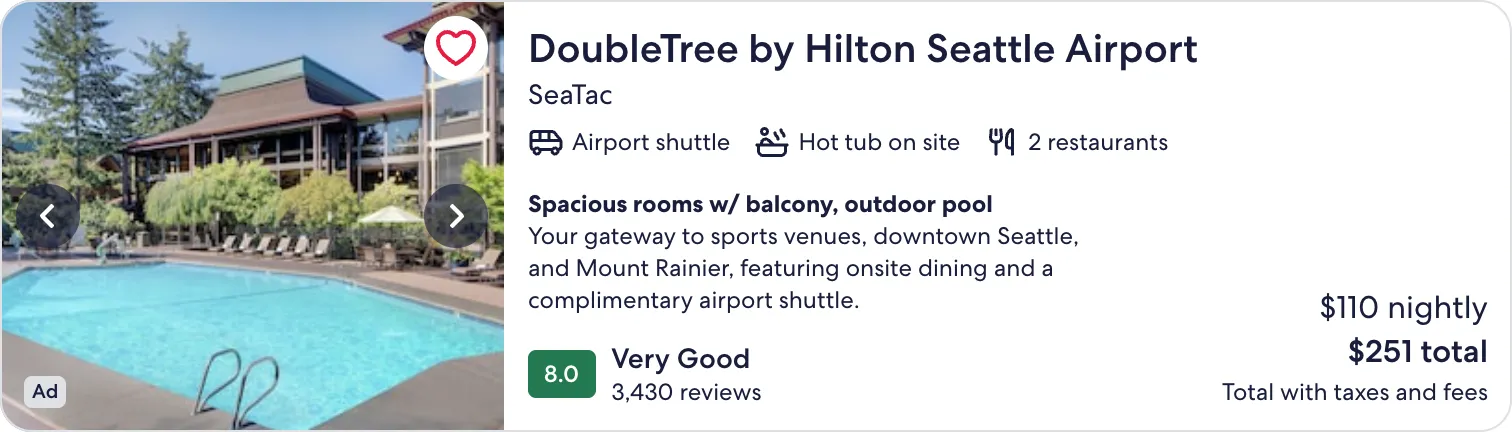
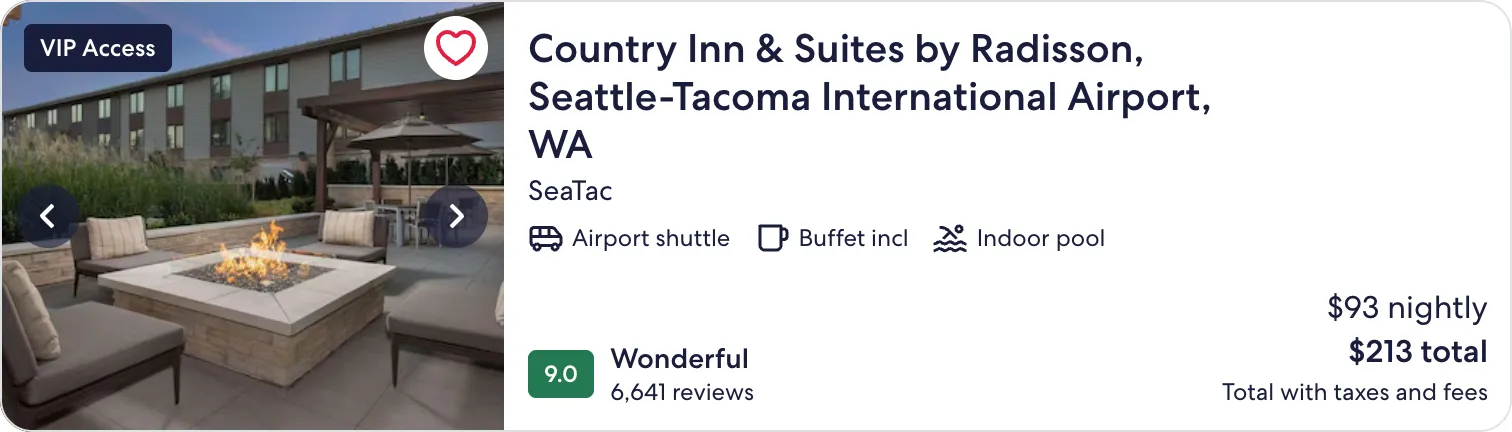
The family I designed
All live, from Expedia Group Advertising’s public materials. Point at a unit to take it apart and see why each layer works the way it does.
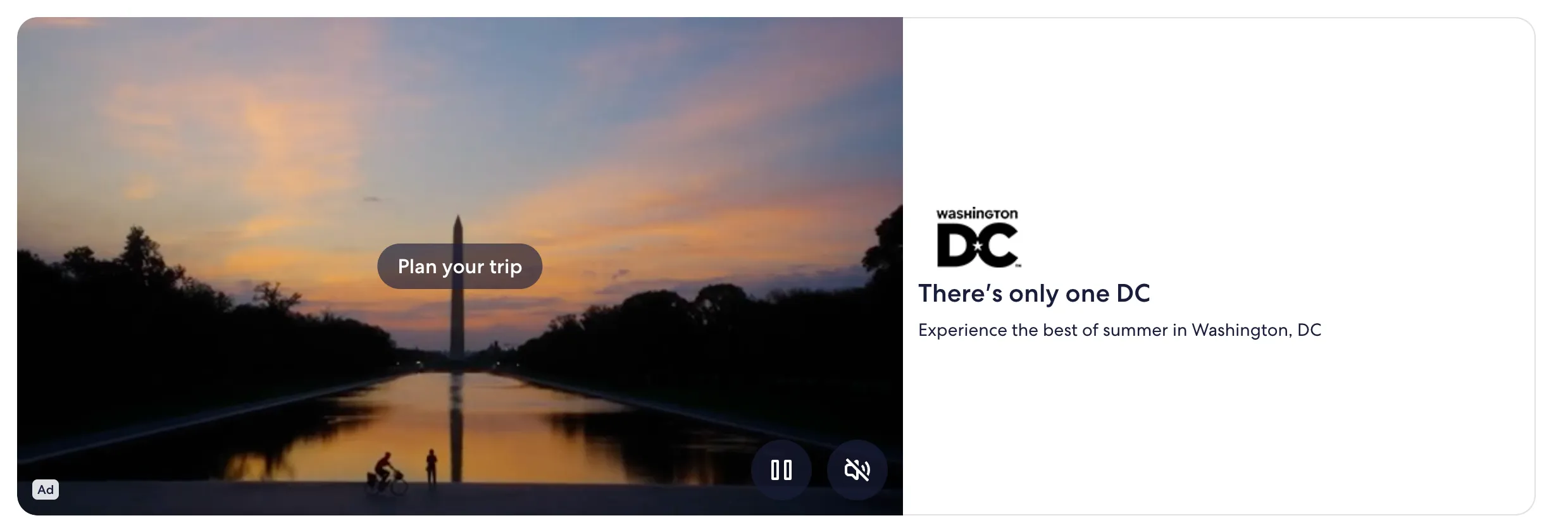
Why each layer works
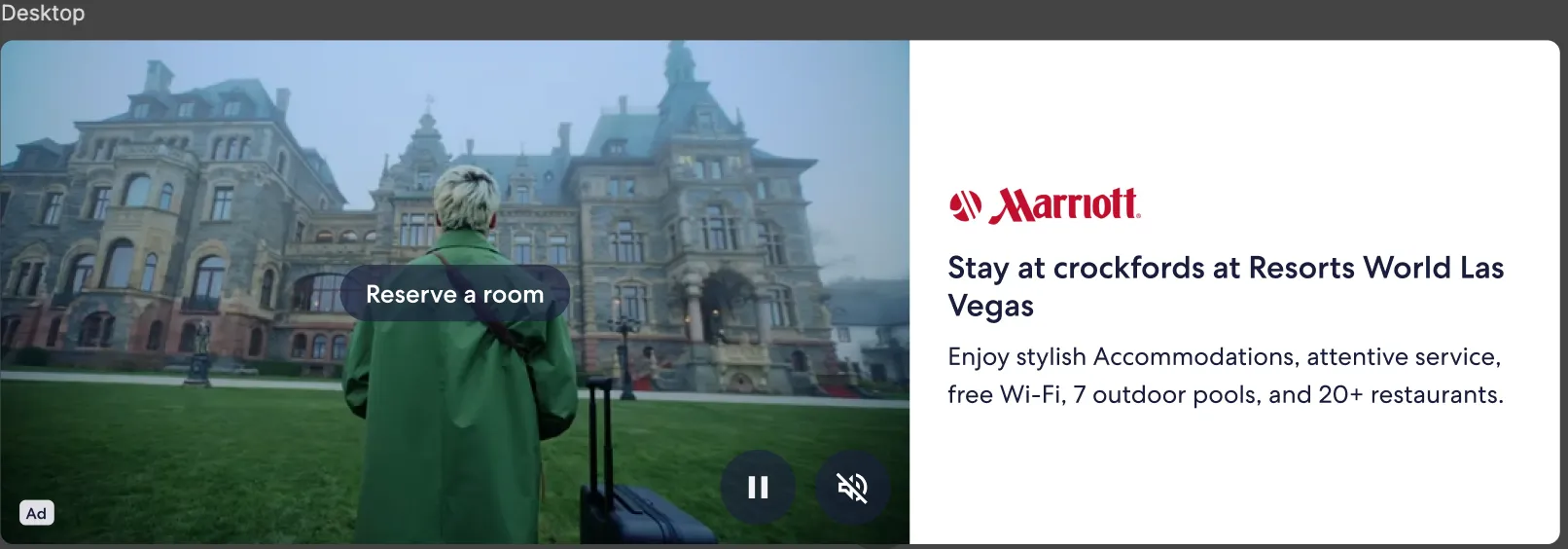
ResultLive on the Expedia homepage, giving brands video in a native slot.
- 1VideoMotion gives brands a story, so the homepage stays inspiring.
- 2Call to actionOne clear action, so travelers know exactly where it leads.
- 3Ad labelAlways visible, so travelers trust what is sponsored.
- 4Sponsor logoA small logo keeps the brand present without shouting.
- 5HeadlineA short headline lands in one glance, even on a phone.
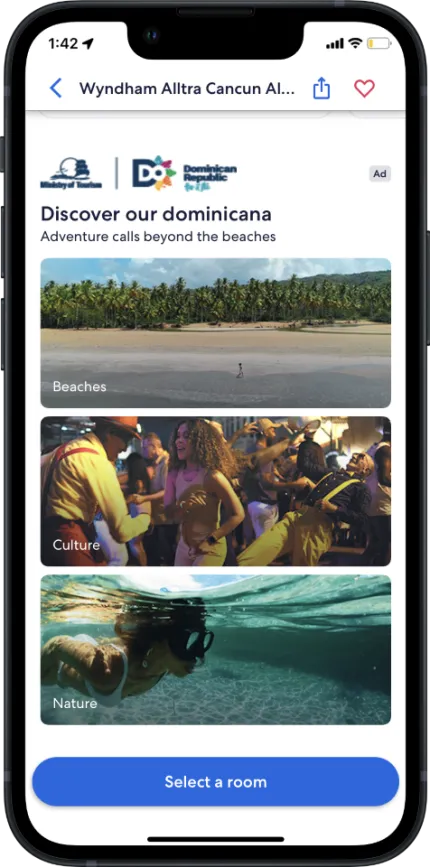
Why each layer works
ResultLive on web and app. Partners tell three stories in one unit.
- 1Sponsor logosLogos up top, so travelers see who is talking.
- 2HeadlineOne headline ties three stories into one idea.
- 3Three storiesThree tiles let travelers explore a place before they book.
- 4Ad labelSame label, same spot, so sponsored never feels hidden.
- 5BookingBooking stays one tap away, so inspiration still leads to rooms.
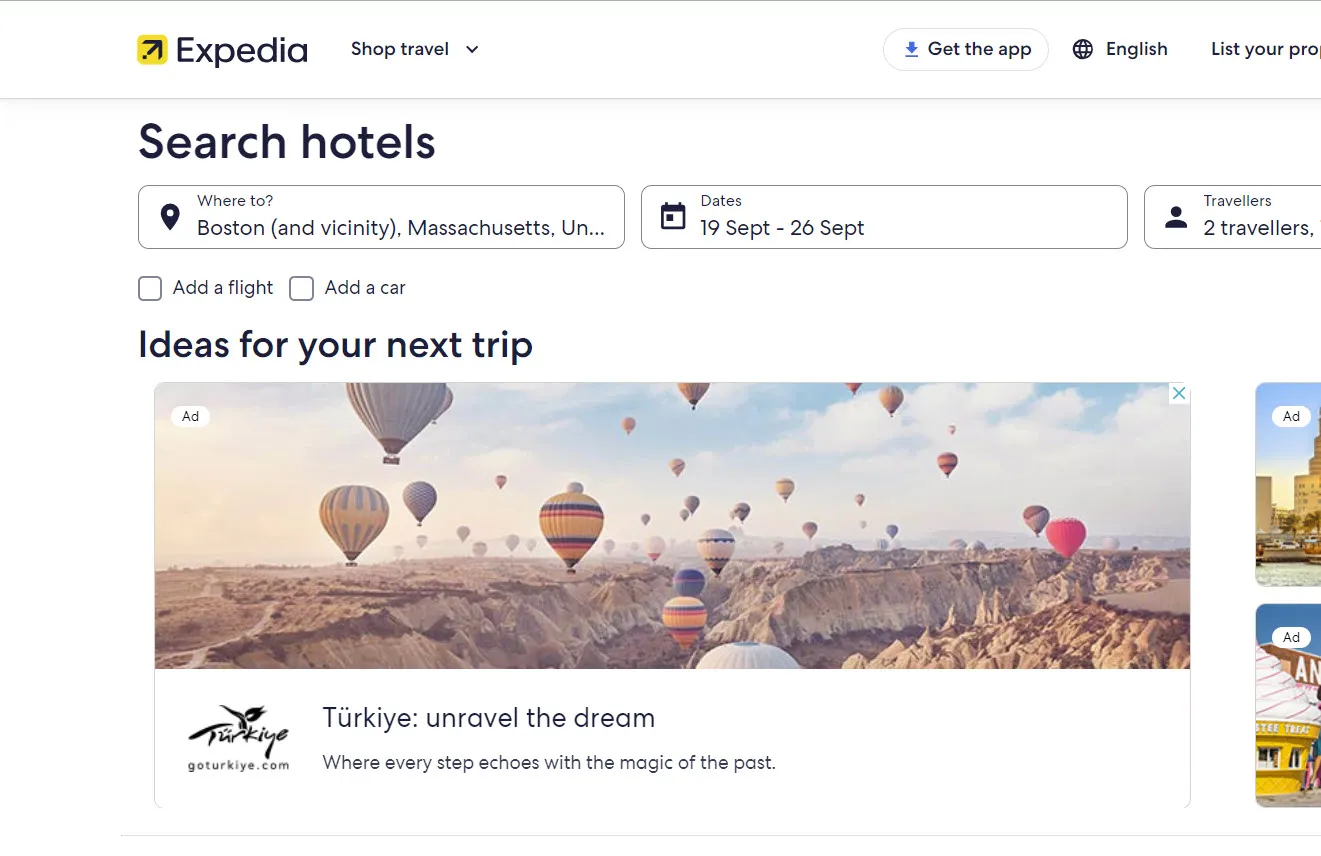
Why each layer works
ResultMy first ads design, and the base for every unit after it.
- 1ImageOne big image sells the place before any words do.
- 2Ad labelA fixed corner label keeps traveler trust.
- 3Sponsor logoThe logo credits the brand without fighting the photo.
- 4HeadlineShort and specific, so it reads in one glance.
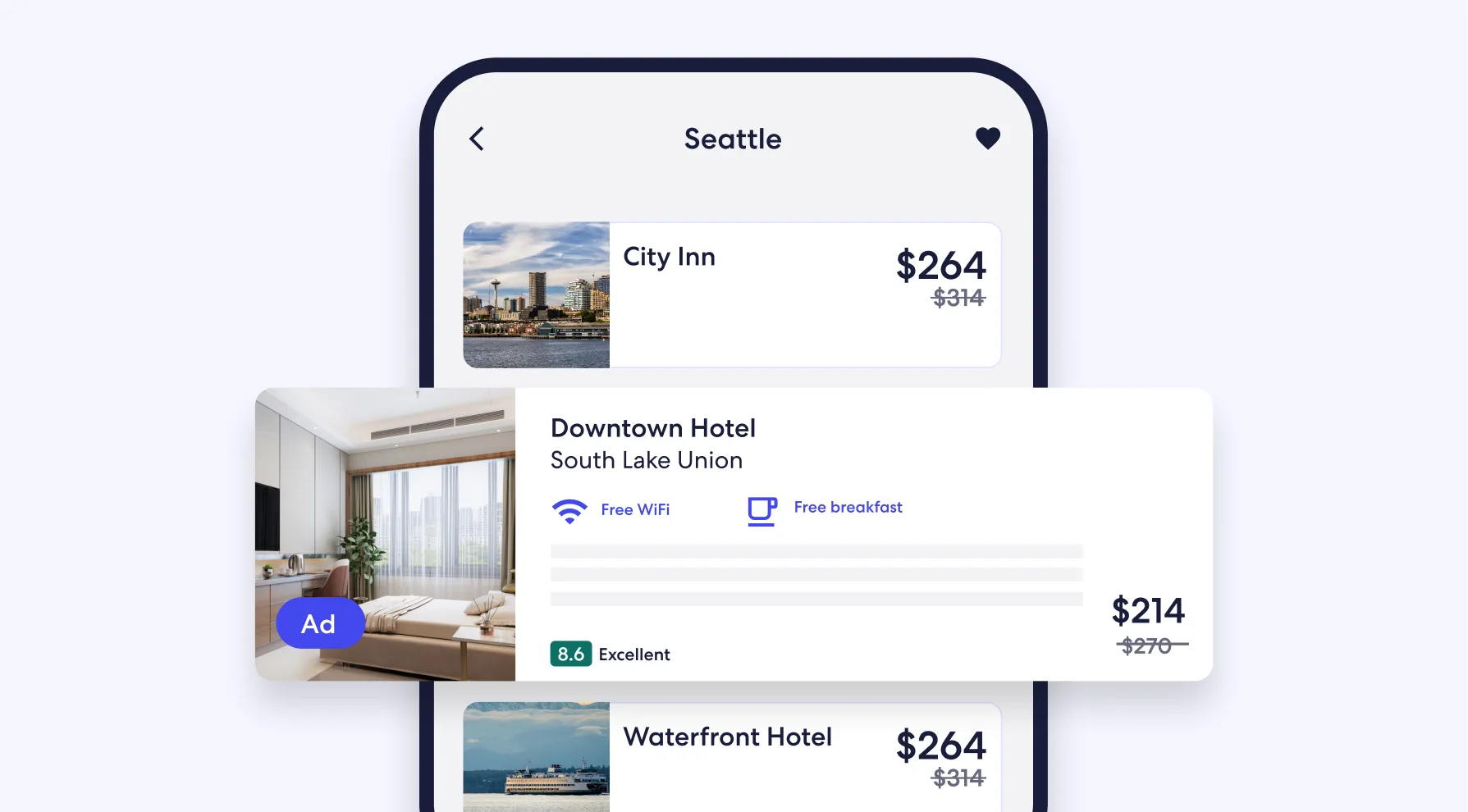
Why each layer works
ResultMy redesign of Sponsored Listings is what travelers see today.
- 1Sponsored listingIt matches organic results, so ads help travelers compare.
- 2Ad labelThe label sits on the photo, so sponsored is clear.
- 3Property nameReal property names, so the ad is a real choice.
- 4PriceThe real price in the usual place keeps comparison fair.
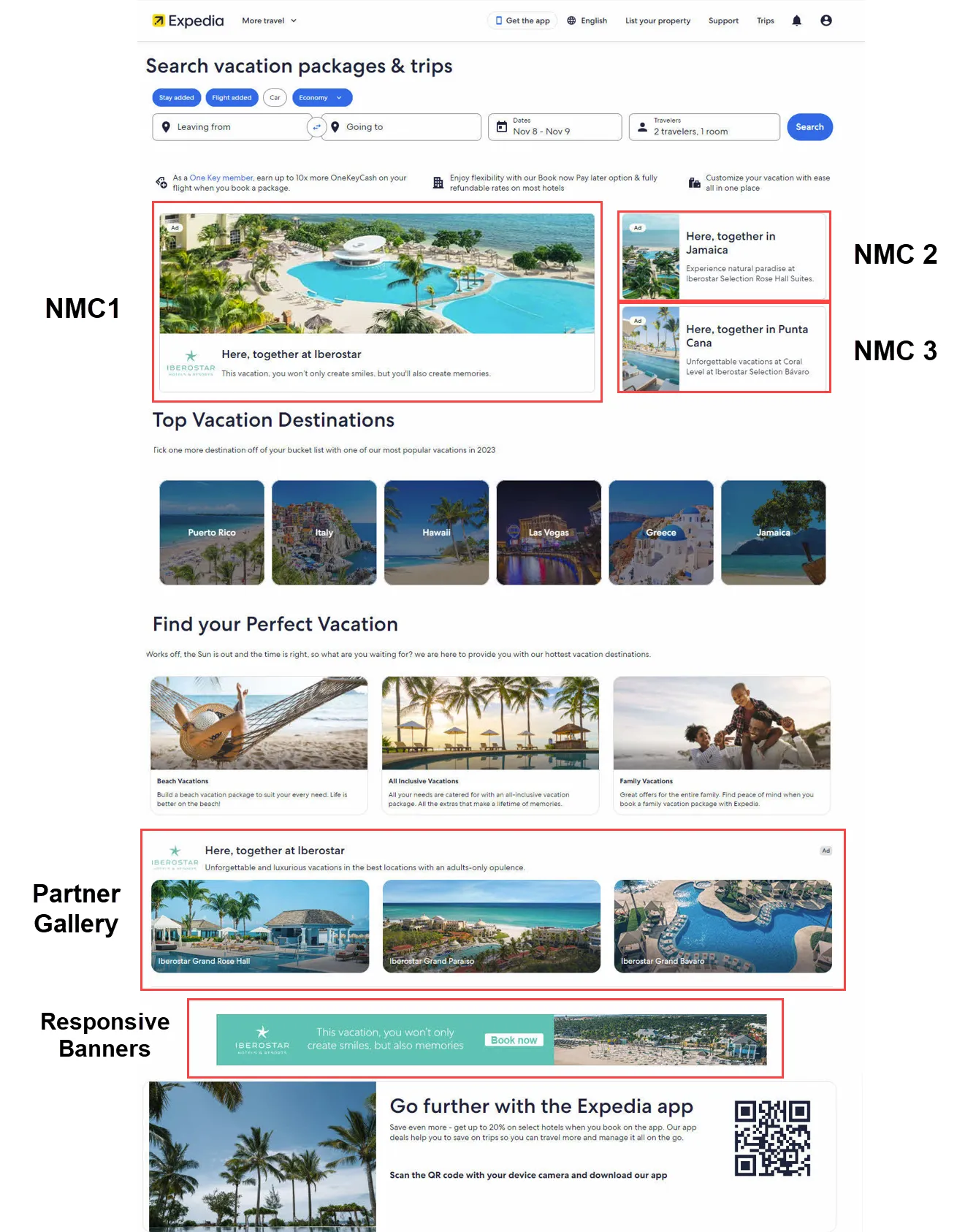
Why each layer works
ResultOne advertiser owns the homepage for 24 hours, as one story.
- 1Lead cardThe biggest card leads, so one brand owns the first look.
- 2Cards 2 and 3Smaller cards repeat the story without crowding search.
- 3Partner GalleryA gallery lower down rewards travelers who keep scrolling.
- 4BannersBanners share one voice, so the day reads as one campaign.
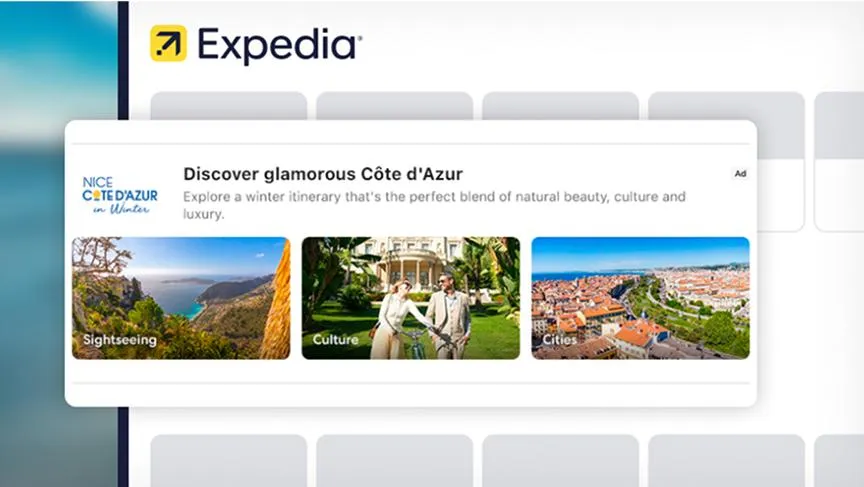
Why each layer works
ResultDestinations show many sides of a place in one unit.
- 1Sponsor logoThe destination logo credits the partner and builds recognition.
- 2HeadlineThe headline names the place, so travelers know where.
- 3Themed tilesThemes let travelers start with what they care about.
- 4Ad labelThe same label as every unit, so trust carries across.
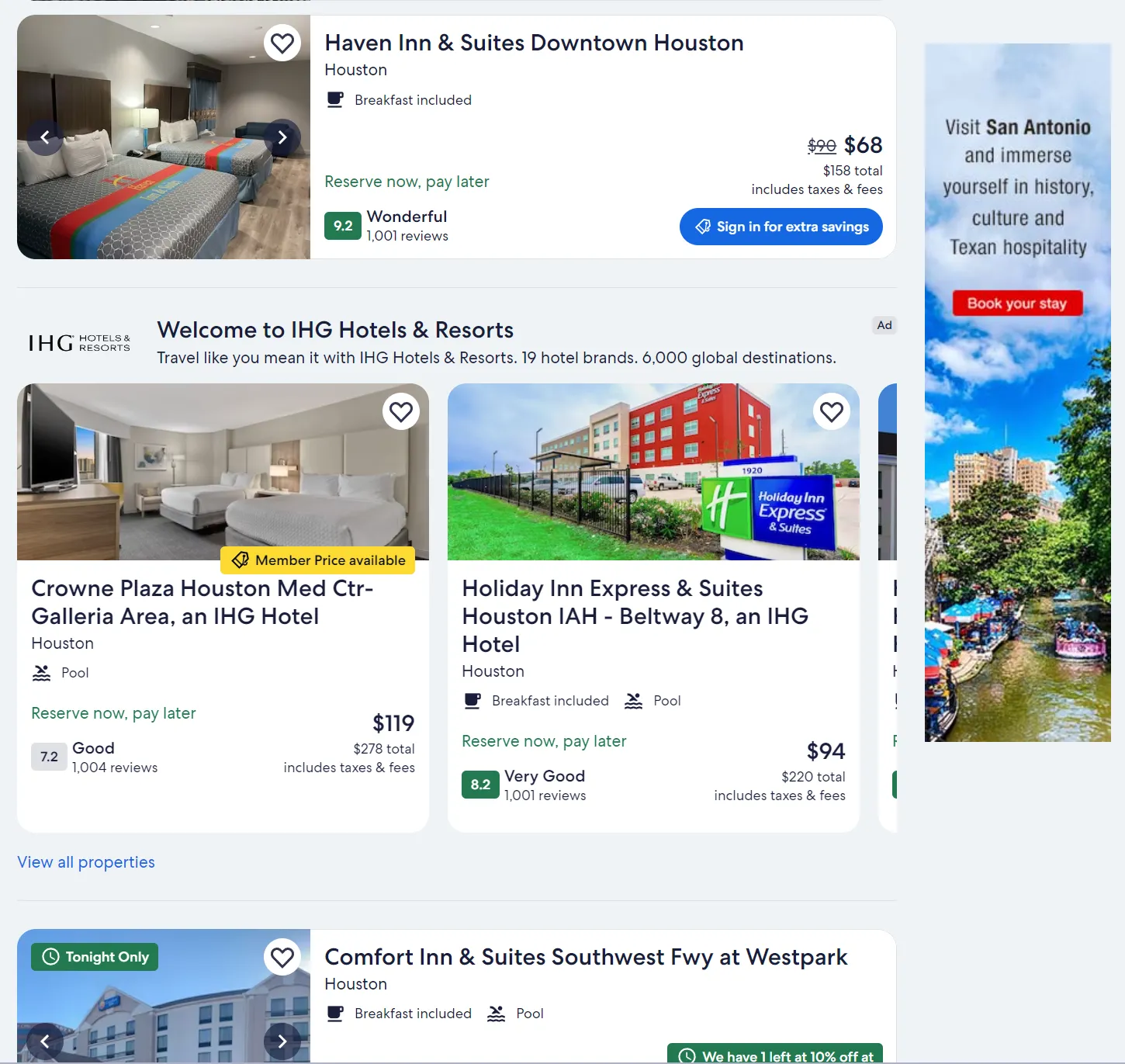
Why each layer works
ResultHotel brands show their own properties inside real search results.
- 1Brand headerA one line header introduces the brand without pushing results down.
- 2Brand hotelsReal hotels travelers can book straight from the row.
- 3Ad labelOne label for the row keeps sponsored content obvious.
Decisions I made
-
One anatomy for every advertiser
Hotels, airlines, destinations, car companies, cruise lines and rentals all get the same layers in the same order.
Why. Travelers learn the pattern once, and every new unit starts from a base that already works.
Trade-off. Advertisers give up some layout freedom. In return every ad reads as part of Expedia.
-
The Ad label never moves
It is always on, in the same place and the same style, in every unit on every brand.
Why. The ads business runs on traveler trust. A label that moves or hides spends that trust.
Trade-off. It costs a little visual freedom in every placement.
-
Accessibility is built into the system
The Figma ads system follows Expedia’s design and accessibility guidelines, and I tested it for accessibility before any team built on it.
Why. Every new unit inherits the same checks, so no advertiser can ship an ad that some travelers cannot use.
Trade-off. Some brand requests do not fit inside the guidelines, and those get a no.
-
Hard copy limits
Headlines get 40 characters, descriptions 100, and each card has one link.
Why. One idea per unit reads in a glance, never wraps badly on a phone, and lets an agency get it right the first time.
Trade-off. Some campaigns have more to say. That belongs on the landing page.
Every unit is measured on clicks and conversion
Testing and validation4 of 7
I built the Figma ads design system on Expedia’s design and accessibility guidelines, and I tested its documentation and its accessibility before teams relied on it. Each unit was measured on click-through and conversion across lines of business, and the results fed the next round of units.
I wrote rules so nobody waits on design
Shipping with PMs and engineers5 of 7
As the solo designer on ads, I worked directly with PMs and engineers from the first concept to launch. I wrote the rules so ad sales, an advertiser’s agency and an engineer make the same call without waiting on me. They live on the public creative spec site advertisers use today.4
I also designed flows in the advertiser dashboard, so what an advertiser sets up matches what a traveler sees.


Türkiye: unravel the dream
Where every step echoes with the magic of the past.
Fits. Reads in one glance.
From $483M to $758M a year
Outcome6 of 7
One unit I designed brings in $13M+ a year in incremental revenue on its own. Across the family, my units raised click-through and conversion across lines of business.
Expedia Group’s ad revenue grew from $483M in 2023 to $758M in 2025.1 The company reported that its video ads doubled click-through rates, that sponsored listings partners grew 22% to their highest level,2 and that it ended 2025 with a record number of active partners and video ads on the Expedia homepage.3
- Every consumer ad unit in the public catalog. 29 units in 8 families, on Expedia, Hotels.com and Vrbo.
- A Figma ads design system that designers across Expedia reuse.
- The Sponsored Listings redesign, live in lodging and flight results.
- Flows in the advertiser dashboard.
All 29 units I designed
Native Marquee Card
- Native Marquee Card 1
- Native Marquee Cards 2 & 3
- Native Marquee Card, mobile app
- Hotels.com Native Marquee
- Native Marquee Carousel
Homepage takeovers
- Expedia homepage takeover
- Tabbed homepage takeover
- Hotels.com homepage takeover
Brand Results Listings
- Hotel Brand Results Listing
- Destination Brand Results Listing
- Airport Brand Results Listing
- Flights Brand Results Listing
- Cars Brand Results Listing
- Cruise Brand Results Listing
- Vrbo Results Listing
- App Brand Results Listings
Video
- Video Brand Results Listing
- Homepage Video Ad
Galleries and carousels
- Partner Gallery
- Destination Experience Gallery
- Featured Brand Carousel
In-flow units
- Flights Upsell Listing
- Interstitials
- Audience-First Native Bundle
Sponsored listings
- TravelAds hotel sponsored listing
- Flights sponsored listing
Display and landing pages
- Standard display
- Rich media display
- Advertiser landing pages
Rules inside the tools, trust next to clicks
What’s next7 of 7
Rules inside the creative tools. The copy and image rules are exact enough to check as advertisers type. Campaigns can launch right the first time, with no review rounds.
Trust measured next to clicks. Pairing click-through with booking and trust signals, so every new unit is judged on what it does for travelers and for advertisers.
What I’d do differently. I would pair trust measures with click-through from the very first unit, instead of adding them once the family was already live. Clicks are easy to count. Trust is what keeps the ads business working.
Sources
Ad images are Expedia Group Advertising’s public marketing materials, shown for context. The two hotel result cards are live expedia.com, captured October 11, 2026. Advertiser creative belongs to its owners. Company figures are Expedia Group’s own reporting. $13M+ is my own measured result, as on my résumé.
- 1Expedia Group FY2025 Form 10-K, revenue by business (advertising excl. trivago)
- 2Expedia Group Q1 2025 earnings call transcript, May 8, 2025 (video ads, 2x click-through; sponsored listings partners up 22%)
- 3Expedia Group Q4 2025 earnings call transcript, Feb 12, 2026 (record active ad partners; video ads on the Expedia homepage)
- 4Expedia Group Advertising public creative specifications site